The AI boom’s newest millionaires don’t write software
Section chiefs at a Japanese memory maker, welders at a rocket company, engineers at a Chinese robot start-up: in 2026 the equity windfall reached the factory floor.
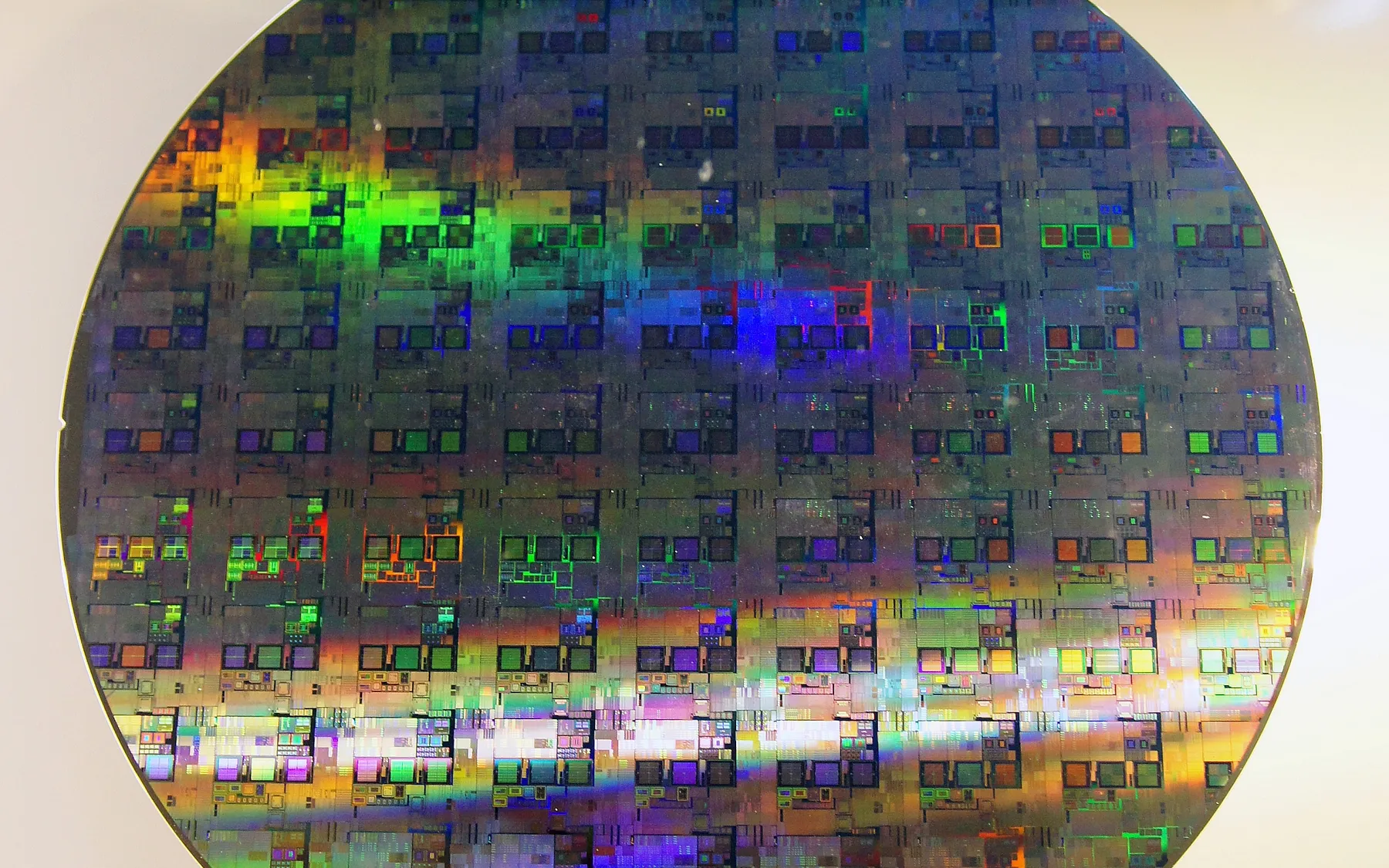
The familiar picture of a technology fortune is a founder in a hoodie and a few hundred engineers with stock options in a software company. The fortunes of 2026 look different. They belong to people who make things: memory chips, rockets, robots.
Four companies in four countries tell the story, and in each the money went further down the organisation than anyone expected.
The section chiefs of Yokkaichi
When Bain Capital led the purchase of Toshiba’s memory business in 2018, it did something unusual for a private-equity buyer. It granted large stock options to executives and also to department and section managers.
That business is now Kioxia. It listed in Tokyo in December 2024 at ¥1,455 a share. By June this year, with AI data centres buying all the flash memory they could get, the shares had reached ¥112,700.
According to Nikkei, about 600 employees now hold options worth an average of roughly ¥1bn each. The options originally granted are worth some ¥790bn in total.
In Japan, where lifetime employment and modest pay have long been the rule for engineers, a kachō, or section chief, worth ¥1bn is a genuinely new creature.
Ten per cent of the profit
In South Korea, SK hynix agreed in 2025 to remove the cap on its bonus pool and give employees 10 per cent of annual operating profit. With analysts forecasting profit of around ₩250tn this year, Reuters calculated an average payout of about ₩779mn, roughly $547,000, for each of some 35,000 staff.
The pay deal struck in August added a condition. At least 60 per cent of this year’s bonus will be paid in company shares rather than cash. Part of the windfall will stay invested in the company that produced it.
Welders and baristas
SpaceX’s listing in June turned about 4,400 current and former employees into millionaires, according to reports at the time. The company had spread equity widely, so the list includes welders, technicians and cafeteria staff as well as engineers.
Some of them now live in Brownsville, Texas, where the effect on house prices is visible in every property tax bill.
One yuan a share
The most striking case is Unitree Robotics, the Hangzhou maker of humanoid and four-legged robots, which listed in Shanghai on 19 August. In September 2017, when the company was short of cash and struggling to pay wages, it gave 17 core employees options priced at one yuan per unit of registered capital, the pre-listing equivalent of a share.
Its founder, Wang Xingxing, stopped paying himself.
Unitree’s shares opened at 1,100 yuan on their first day. The head of mechanical design, born in 1991, held about 1.78mn shares, a stake the Chinese financial site TechFlow put at 1.58bn yuan on paper. More than 60 front-line engineers and supervisors hold smaller stakes worth between 35mn and 170mn yuan each at the first day’s close, according to figures compiled from the prospectus.
One in three of Unitree’s 516 staff subscribed to employee plans at the listing.
Paper, and locks
Almost all of this is paper wealth, and much of it is locked. Unitree’s employee platform cannot sell for 36 months. SpaceX employees face staged releases through December. SK hynix’s share bonuses tie staff to the stock price.
That is deliberate. Companies want the windfall to keep people, not to send them to the beach. It also means that a memory-chip price cycle or a robot-market correction could shrink these fortunes before most of their owners can spend them.
Still, the pattern is new. In the software boom, equity made engineers rich in a handful of zip codes in California. In the hardware boom, it is reaching Yokkaichi, Icheon, Brownsville and Hangzhou.
Sources
- Nikkei: about 600 Kioxia employees worth ¥1bn through stock options (30 Jun 2026)
- Seoul Economic Daily: Kioxia stock options mint 600 employee millionaires
- Reuters: SK Hynix workers to get 60% of this year’s bonuses in stock
- Seoul Shinmun: SK hynix bonus paid 60% in shares, 40% in cash (21 Aug 2026)
- Fox Business: SpaceX IPO turning everyday workers into millionaires
- TechFlow: Unitree’s ¥1-a-share employee shareholders
- The Standard: Unitree founder tops post-90s rich list
Cover image: Peellden, Wikimedia Commons, CC BY-SA 3.0. Cropped.

More from OutBragger
View all OB / 01
In Hangzhou, the AI billionaire bought into the robot billionaire’s IPO
When Unitree Robotics listed in August, one of its strategic investors was the company behind DeepSeek. Hangzhou’s new fortunes are starting to feed each other.
 OB / 02
Paramount’s new owners inherited a $400mn tax argument from Viacom
The IRS has proposed up to $400mn in extra tax on Viacom’s returns for 2017 to 2019. Paramount Skydance says it disagrees and will book any change in its third-quarter results.
 OB / 03
Madrid scrapped its wealth tax. Its millionaires paid it €643mn anyway
Spain’s wealth tax raised a record €2.15bn in 2024, and the number of people declaring more than €30mn has doubled since 2013. The region famous for not charging it has become one of its biggest collectors.
Discussion
Join this article’s en edition thread. Replies in other language editions stay separate.