The Hermès heir, the gardener and a pact from 2002
Court papers show LVMH agreed in 2002 to buy Hermès shares from the founding family. Nicolas Puech says his stake, now worth about $10bn, vanished. LVMH says it never tried to take it.
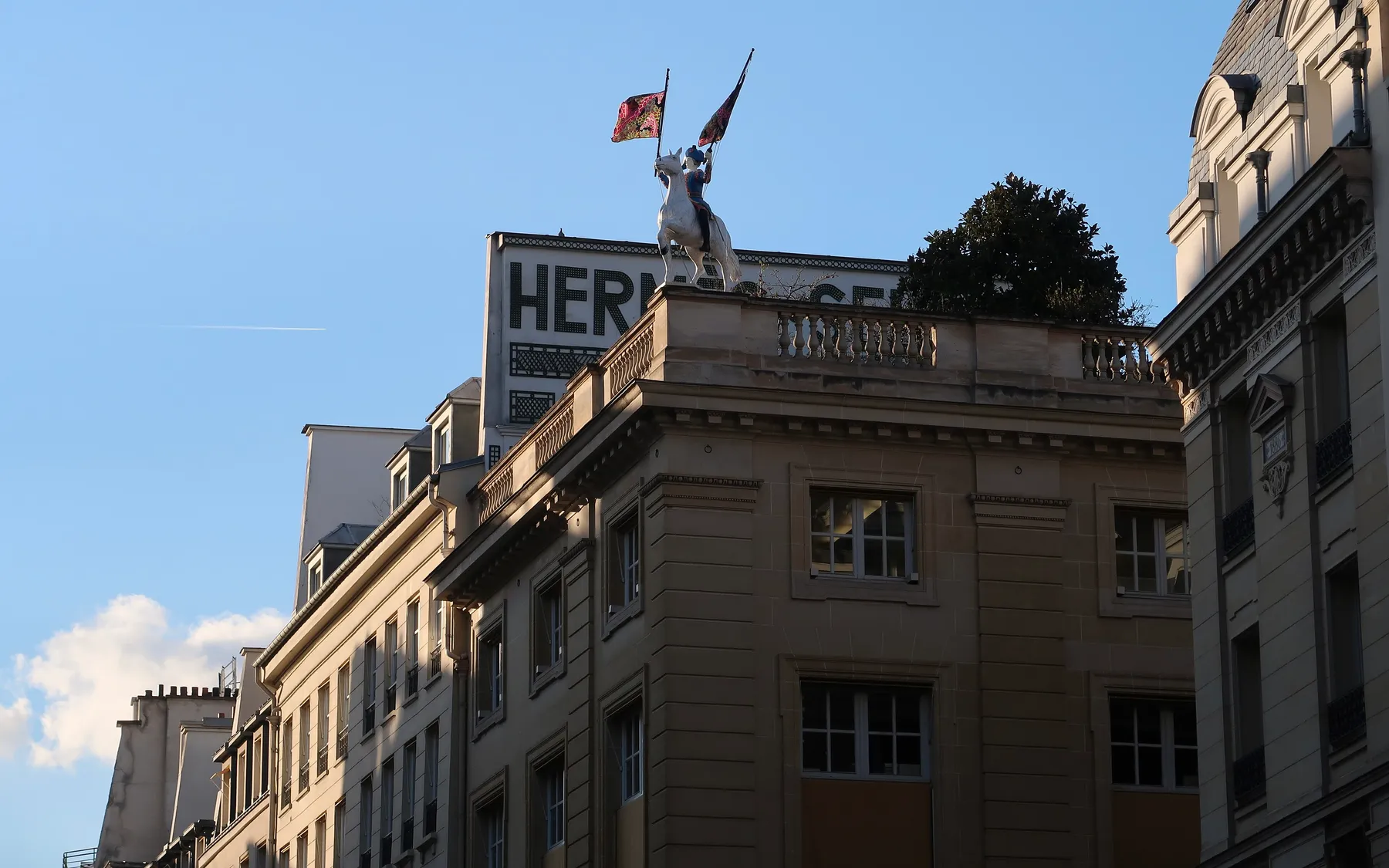
Great family fortunes usually take a few generations to lose. Nicolas Puech says his went missing within one, and that he did not notice for years. In March 2024 Forbes put the Hermès heir’s wealth at $15.6bn.
A year later it removed him from its billionaires list altogether, after Puech said the fortune had, in effect, vanished.
The story has always had the ingredients of a Simenon novel: an unmarried octogenarian in a Swiss mountain village, a trusted adviser, a former gardener to be adopted as an heir, and the most prized shareholding in French luxury. On 17 September it acquired something more useful to lawyers than atmosphere.
Court documents reported that day show that LVMH signed an agreement in November 2002 to buy millions of Hermès shares from Puech and other members of the founding family.
That matters because of what LVMH told a court in June. “The group never contemplated acquiring Nicolas Puech’s stake, let alone against his will,” it said. The two statements are not necessarily contradictory.
An agreement to buy is not a purchase, and LVMH told a Swiss court in 2017 that the 2002 agreement “was never executed”. Still, lawyers for Puech are likely to make a good deal of the distance between the two.
The pact
According to the documents, the 2002 agreement was signed by Pierre Godé, then Bernard Arnault’s long-standing lieutenant, and Eric Freymond, a Geneva wealth manager who ran Puech’s affairs for decades. Purchases were to begin after Jean-Louis Dumas, Hermès’s long-serving chief executive, stepped down.
He retired in 2006.
LVMH and the Arnault family’s holding company paid Freymond’s firm at least $20mn in commissions and fees between 2001 and 2009, the period in which LVMH was quietly assembling its Hermès position. In October 2010 LVMH surprised the Hermès family by disclosing a stake of about 17 per cent.
It later reached roughly 23 per cent before a 2014 settlement in which LVMH distributed the shares to its own investors and walked away.
Hermès responded to the raid by pooling family holdings into a locked holding company designed so that no outsider could ever repeat the manoeuvre. Puech, a fifth-generation descendant of Thierry Hermès, stayed outside that structure.
When he left the supervisory board in 2014, he was still described as holding more than 5 per cent of the company.
The missing six per cent
Puech says he learnt in 2022 that his shares, around 6 per cent of Hermès, were gone. At current prices that holding would be worth roughly $10bn; his lawsuit in France against LVMH, Arnault and companies connected to Freymond seeks €14bn in damages.
In July 2024 a Swiss court declined to hold Freymond liable, noting that Puech had placed “blind trust” in his adviser and could have revoked the arrangement at any time. Freymond died in July 2025.
For anyone who manages money for the very rich, that phrase is the uncomfortable part. Ultra-wealthy families often delegate precisely because they do not wish to read custody statements. A fortune that consists of one famous share certificate is easy to feel secure about and, it turns out, surprisingly easy to lose track of.
Enter Qatar
The case has a second front in Washington. In February 2025 a stock purchase agreement was signed for 6,082,615 Hermès shares, about 5.8 per cent of the company, valued at €14bn. The buyer was Honor America Capital, a vehicle backed by Qatar’s ruling family, with funding secured by Sheikh Tamim bin Hamad Al Thani.
The deal was due to close on 3 March 2025. On 19 March Puech’s lawyer terminated it.
Honor America is suing in federal court in the District of Columbia for delivery of the shares or $1.3bn in damages. Puech’s counsel says he “played no role in the proposed sale and was unaware of the deal until reading about it in the press”.
Which invites an obvious question that the litigation has not yet answered: how does one sign a contract to sell shares that one says one no longer owns?
And the gardener
The detail that made the story famous, the plan reported in December 2023 to adopt a former gardener and leave him a share of the estate, is now the least valuable part of it. An inheritance is worth what the estate holds. If Puech is right, the estate holds a lawsuit.
The timing is poor for Arnault, whose company’s shares are down by more than a third this year and who has slipped out of the world’s top ten. LVMH can survive a lawsuit over events of the early 2000s without much difficulty.
What it would rather avoid is a fresh round of disclosure about how, exactly, it came to own almost a quarter of its most admired rival. Asked about the 2002 agreement and the payments to Freymond, an LVMH spokesman declined to comment.
Sources
- LVMH signed a secret 2002 pact to buy Hermès heir’s shares (17 Sep 2026)
- The Fashion Law: the Qatari deal and the €14bn that disappeared
- Wikipedia: Nicolas Puech
- Caproasia: LVMH denies agreement to buy Puech’s shares (24 Sep 2026)
Cover image: Polymagou, Wikimedia Commons, CC BY 4.0. Cropped.

More from OutBragger
View all OB / 01
Six figures to walk in: 2026 repriced the world’s scarcest seats
The Met Gala broke $100,000 a ticket, Wimbledon’s best seats cost £116,000 for five years, and FIFA let the price of the World Cup final float. The people who run exclusive events have stopped leaving money on the table.
 OB / 02
Europe’s great inheritance fights are being settled in Swiss villages and Hong Kong banks
The Agnelli, Delon, Hermès and Wahaha fortunes are all tied up in court. In each case the argument turns on a Swiss address, a Swiss will or a Hong Kong trust.
 OB / 03
Paramount’s new owners inherited a $400mn tax argument from Viacom
The IRS has proposed up to $400mn in extra tax on Viacom’s returns for 2017 to 2019. Paramount Skydance says it disagrees and will book any change in its third-quarter results.
Discussion
Join this article’s en edition thread. Replies in other language editions stay separate.