Samsung’s heirs have paid the taxman. Now they have to pay the banks
The Lee family finished paying a record ₩12tn inheritance tax in April. More than ₩2tn borrowed against Samsung shares to do it is still outstanding, and some of it falls due within months.
In April the family of Lee Kun-hee made the last of six payments on the inheritance tax he left behind. The bill, about ₩12tn or $8.1bn, was the largest in South Korean history, and its completion was duly celebrated in the Korean press.
Less attention has gone to what the family borrowed to pay it. According to Investchosun, a Korean financial news site, members of the family still owe more than ₩2tn on loans secured against their Samsung shares.
Some of that money has already fallen due. About ₩754bn of the loans matured in July. More than ₩400bn more comes due next April.
Who borrowed
The tax was split four ways. Hong Ra-hee, Lee’s widow, owed about ₩3.1tn. Their son Lee Jae-yong, now Samsung’s chairman, owed ₩2.9tn.
Their daughters Lee Boo-jin, who runs Hotel Shilla, and Lee Seo-hyun, of Samsung C&T, owed ₩2.6tn and ₩2.4tn.
The chairman paid his share from dividends and personal loans, without selling or pledging shares in the core companies. That has been widely noted. It was possible partly because his mother and sisters did the selling and the pledging.
Investchosun’s figures show Hong had borrowed about ₩1.86tn against shares equal to 0.65 per cent of Samsung Electronics. Lee Seo-hyun had borrowed about ₩498bn against 0.19 per cent.
Of the July maturities, ₩485bn was Hong’s and ₩269bn her daughter’s. Loans of that kind are usually rolled over or repaid from share sales. Either way, the shares stay pledged to banks until the debt is cleared.
Selling to repay
Hong has already sold heavily. In the spring she disposed of 15mn Samsung Electronics shares through a trust arrangement with Shinhan Bank, and her stake in the company fell below 1.5 per cent, from 2.3 per cent five years ago.
The loans are not a sign of strain. With Samsung Electronics shares well above the levels of a few years ago, the pledged stock is worth several times the debt. Investchosun expects further block sales rather than any forced selling.
But every block sale by the widow or a daughter moves a little more of the family’s ownership into public hands. Over five years, the tax has redrawn the family’s shareholdings. The chairman’s Samsung Electronics stake edged up, from 1.63 per cent to 1.65 per cent, while his mother’s shrank by more than a third.
The art went free
One part of the estate avoided both tax and debt. In 2021 the family gave most of Lee Kun-hee’s art collection, about 23,000 works including pieces by Monet, Picasso and Korean masters, to national museums.
Donations to the state are exempt from inheritance tax. The “Lee Kun-hee Collection” has since toured Korea to long queues.
The paintings cost the family nothing further. The shares, five years on, are still being paid for.
Sources
- Investchosun: how the Samsung family will repay ₩2tn of share-backed loans (26 May 2026)
- CEO Score Daily: Samsung family clears ₩12tn inheritance tax (3 Apr 2026)
- The Korea Herald: Samsung family pays record ₩12tr tax, tightens grip on group
- Seoul Economic Daily: Jay Y. Lee completes ₩2.9tn inheritance tax payment (5 Apr 2026)
- UPI: Samsung heirs complete $8.1bn inheritance tax
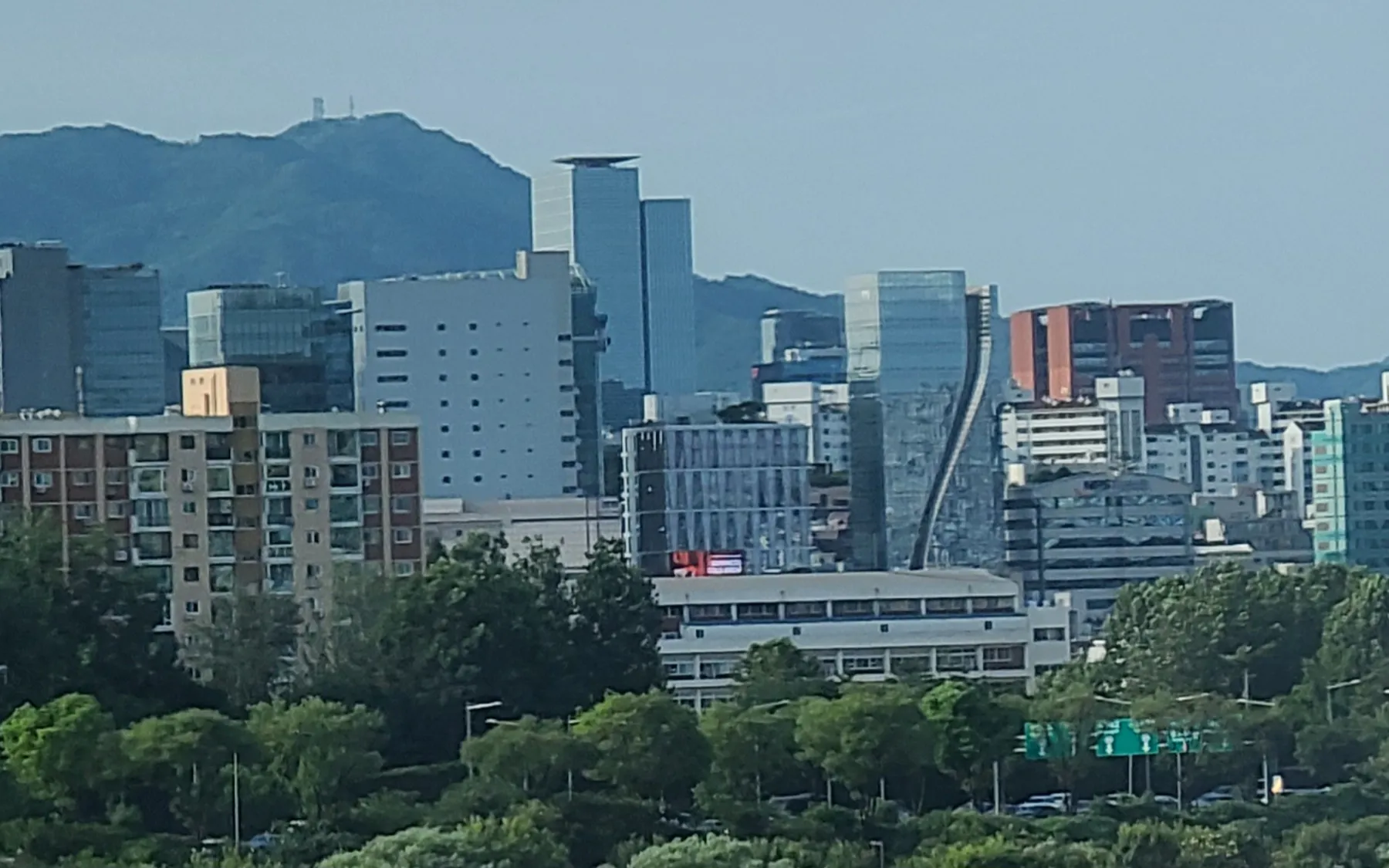
Cover image: Ox1997cow, Wikimedia Commons, CC BY-SA 4.0. Cropped.

More from OutBragger
View all OB / 01
Paramount’s new owners inherited a $400mn tax argument from Viacom
The IRS has proposed up to $400mn in extra tax on Viacom’s returns for 2017 to 2019. Paramount Skydance says it disagrees and will book any change in its third-quarter results.
 OB / 02
Madrid scrapped its wealth tax. Its millionaires paid it €643mn anyway
Spain’s wealth tax raised a record €2.15bn in 2024, and the number of people declaring more than €30mn has doubled since 2013. The region famous for not charging it has become one of its biggest collectors.
 OB / 03
Tokyo’s ¥100mn flat has become ordinary. Look at the builders before the foreigners
New flats now average more than ¥100mn in 19 of Tokyo’s 23 wards. The buyers are mostly Japanese, and the cause is a building industry that can no longer build very much.
Discussion
Join this article’s en edition thread. Replies in other language editions stay separate.