Software is cheap to copy and can be sold to many more customers at little extra cost. That is one reason investors have paid high prices for successful software companies. Software also sits inside products that are not usually described as software at all.
This ranking uses CompaniesMarketCap’s software category on 14 October 2026. The category is drawn broadly: Apple, at the top, earns much of its revenue from devices, and Alphabet from advertising. We keep the source’s classification, so the list is best read as one data provider’s view of the software economy.
Subscriptions changed the business
Many software companies now charge customers a recurring fee instead of selling a licence once. That makes revenue more predictable, and investors often value it accordingly. It also means a company can report rising sales for years before it reports a profit.
Customers you rarely see
Below the largest names, the list includes companies that sell cybersecurity, databases, design and engineering tools, and business applications. Their customers are mostly organisations rather than consumers. Many of these companies are therefore less familiar than their market values suggest.
Valuations built on growth
Software companies are often valued on expected growth, so a change in that expectation can move the share price sharply. A market capitalisation records the price at capture. It is not a measure of revenue, profit or the number of people who use a product.
What this snapshot shows
Apple leads this captured list at approximately US$5.02tn. The entry at number 100, UiPath, is approximately US$6.8bn. The first ten account for 83.6% of the sum of the hundred reported values. That share is calculated within this list; it is not a share of the whole software industry.
The first ten
Apple
Listing symbol: AAPL ·
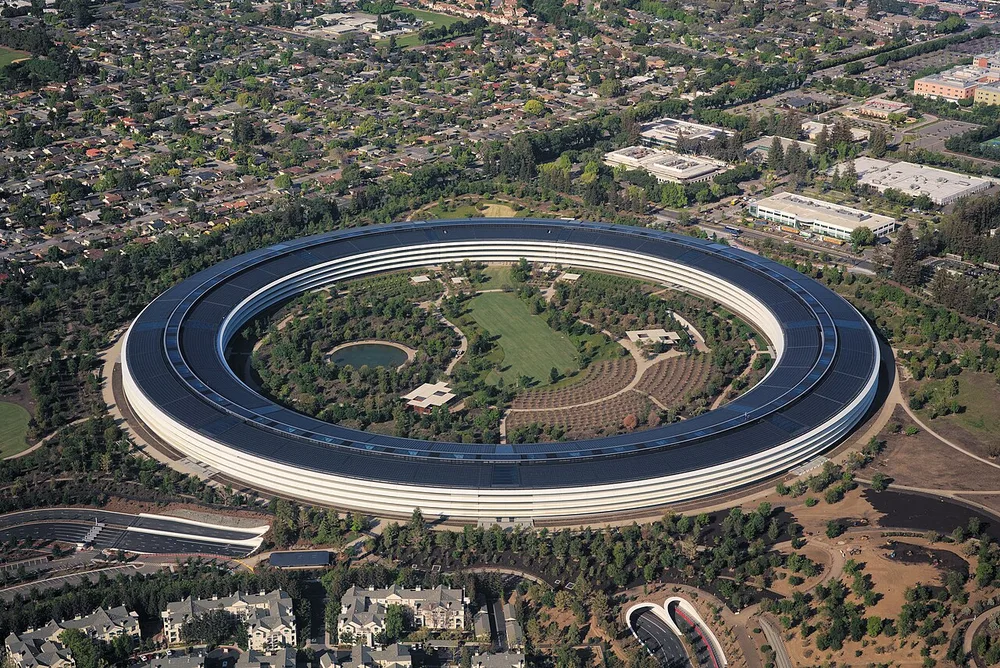
Apple combines hardware, operating systems and services in products intended to work together. The iPhone is its most recognisable example, but Macs, iPads, watches and the services surrounding them extend the relationship beyond a single purchase. The company’s origins in personal computing remain visible in that integration of product and software design.
Its market value prices the whole business, including expectations about future products and services. It is not the retail value of the devices already in customers’ pockets or on their desks.
Alphabet (Google)
Listing symbol: GOOG ·
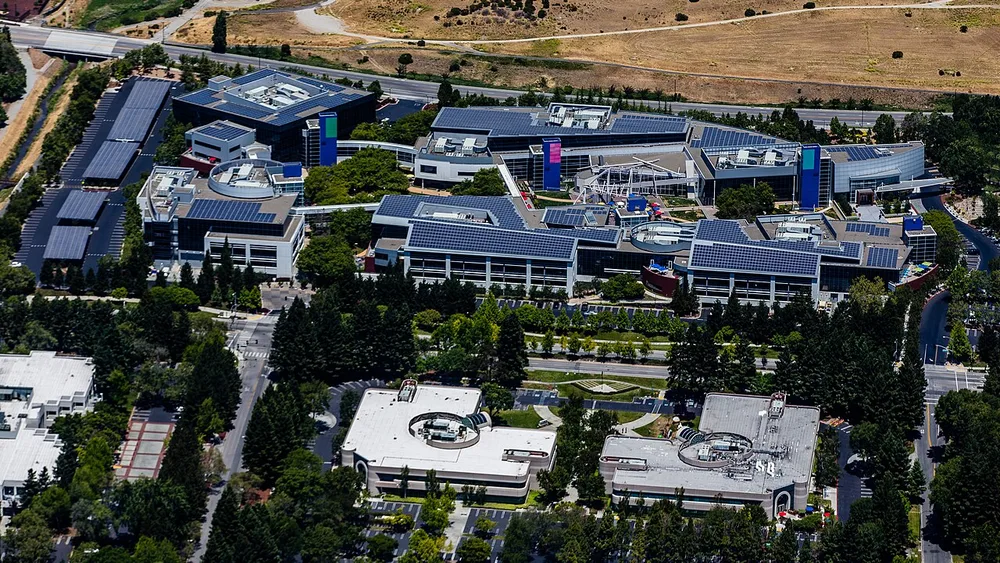
Alphabet was created in 2015 as the parent of Google and a wider collection of businesses. Search and advertising are central to its economic story, while YouTube, Android and cloud services give it several other routes into people’s working and everyday lives.
The listed parent is the unit being valued here. Google’s familiar name helps readers identify the company, but the number represents Alphabet’s equity as a whole, including activities that a user of the search engine may rarely encounter.
Microsoft
Listing symbol: MSFT ·
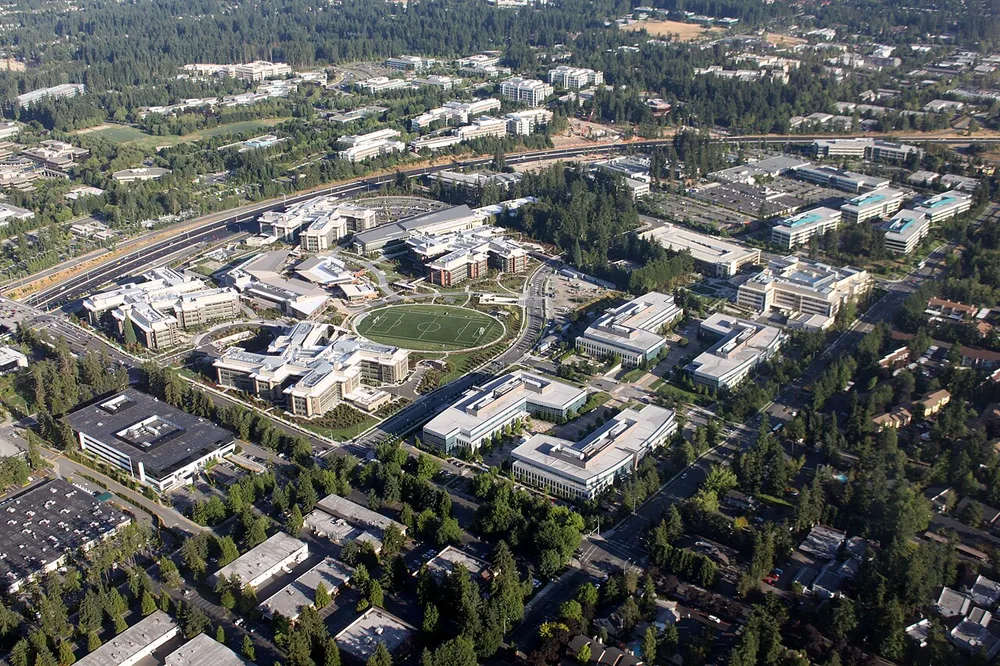
Microsoft’s history runs from software for early personal computers to the infrastructure of modern offices and data centres. Windows and Office made the brand familiar, while Azure, business applications, developer tools and gaming expanded its reach into other settings.
Its place in the ranking reflects that combination of established software relationships and newer computing demand. A company can buy Microsoft services throughout its organisation, from an employee’s desktop to the systems delivering its own products to customers.
Palantir
Listing symbol: PLTR ·
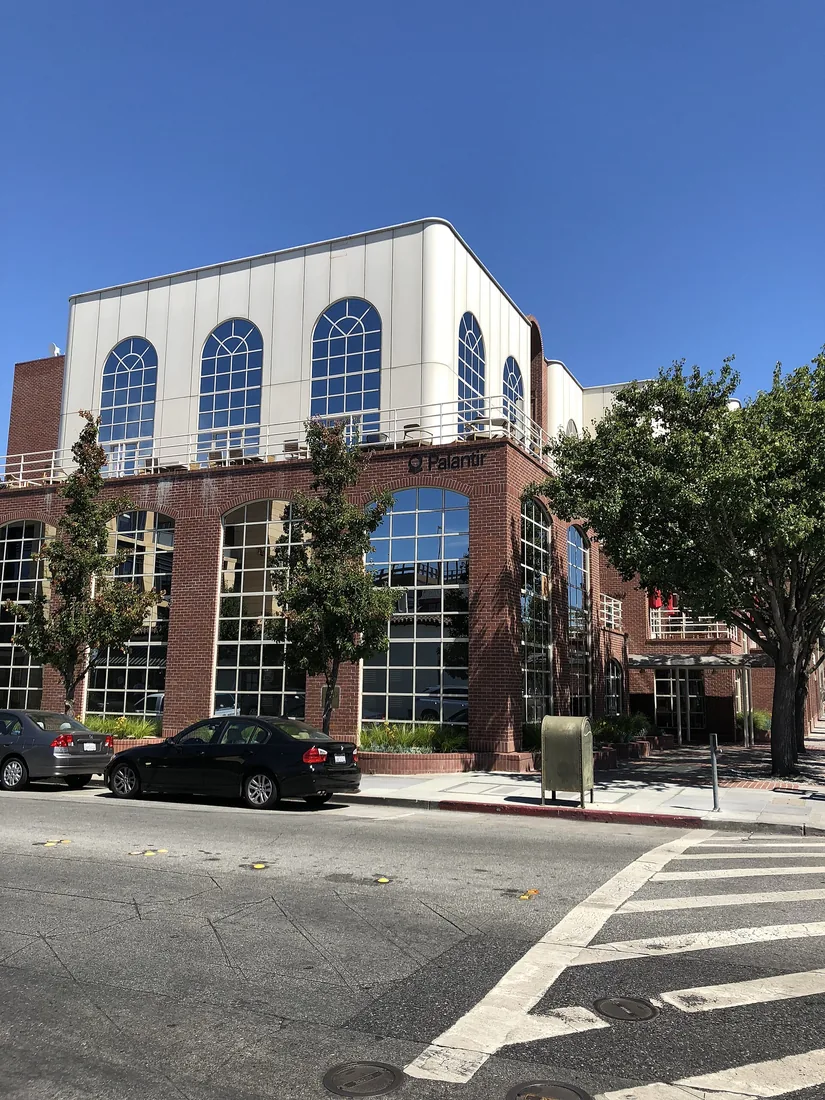
Palantir makes software that combines and analyses large amounts of data. Founded in 2003 by a group including Peter Thiel and Alex Karp, it was shaped early on by work with US intelligence analysts. Its Gotham platform is used by militaries and counter-terrorism analysts.
Its Foundry platform and its Artificial Intelligence Platform, launched in 2023, apply the same approach for companies and civilian agencies. Palantir went public in 2020. Its role in government surveillance and policing has drawn criticism from civil liberties groups.
Oracle
Listing symbol: ORCL ·
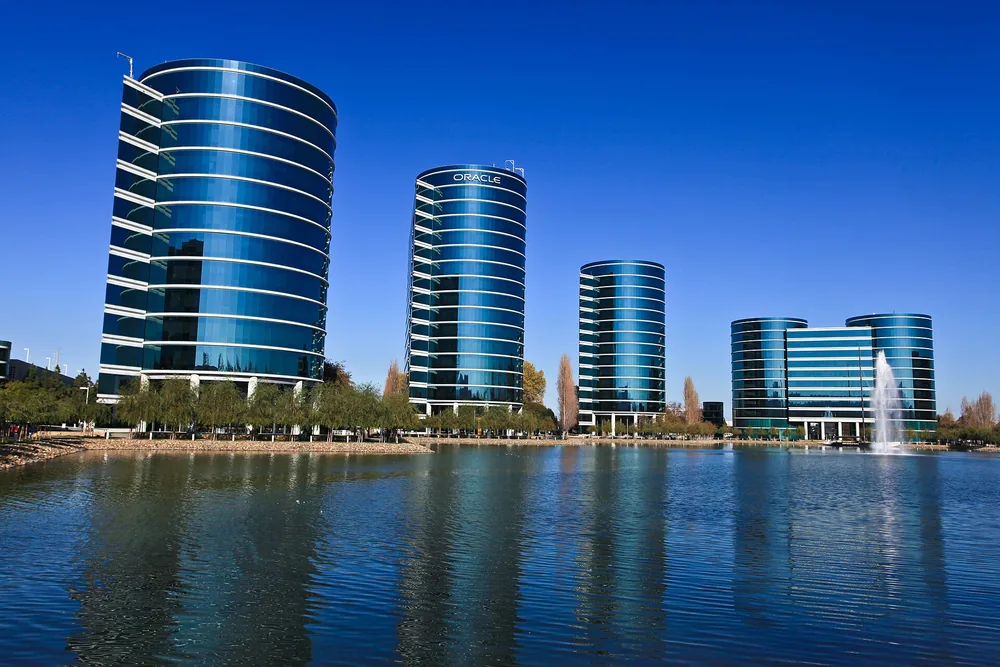
Oracle was founded in Santa Clara, California, in 1977 by Larry Ellison, Bob Miner and Ed Oates. Its name came partly from the code name of a 1977 project for the CIA, its first customer. The name was used for its relational database before the company adopted it in 1983.
Acquisitions including PeopleSoft, Sun Microsystems and Cerner added business applications, hardware and health information technology. Oracle also sells cloud infrastructure and joined the Stargate venture for AI data centres with OpenAI and SoftBank in 2025.
Palo Alto Networks
Listing symbol: PANW ·
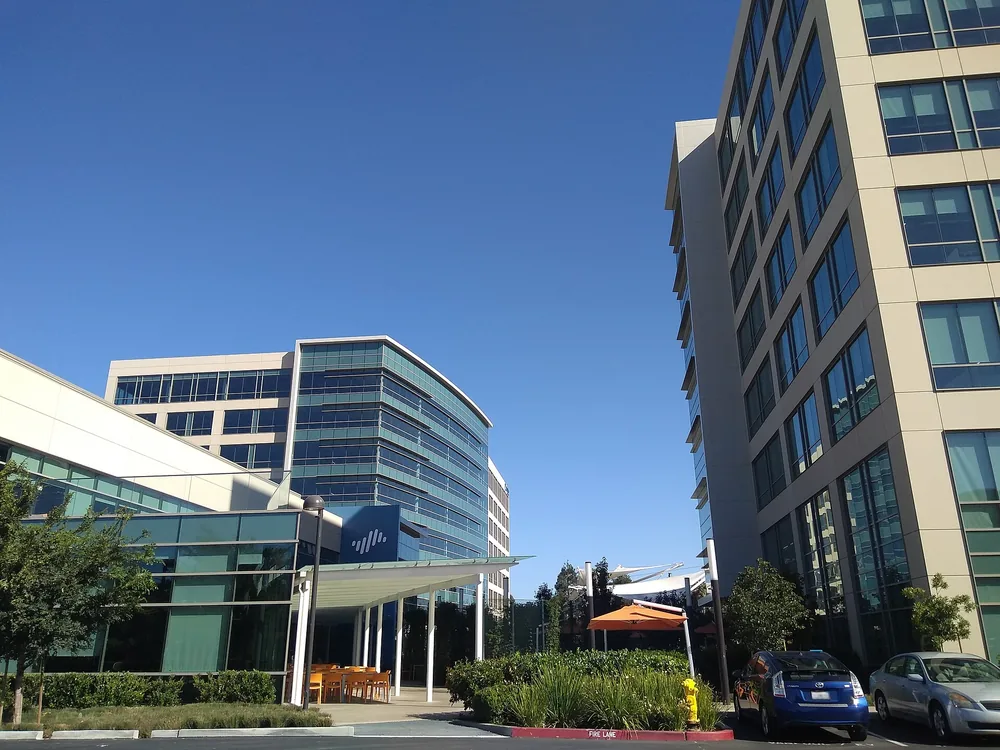
Palo Alto Networks was founded in 2005 by Nir Zuk, a former engineer at Check Point and NetScreen Technologies. Based in Santa Clara, California, it made its name with advanced firewalls and listed on the New York Stock Exchange in 2012.
It has since extended into cloud security and AI-based security operations, partly through acquisitions. These include the US$25 billion purchase of CyberArk, completed in February 2026. The company serves more than 70,000 organisations in over 150 countries.
CrowdStrike
Listing symbol: CRWD ·
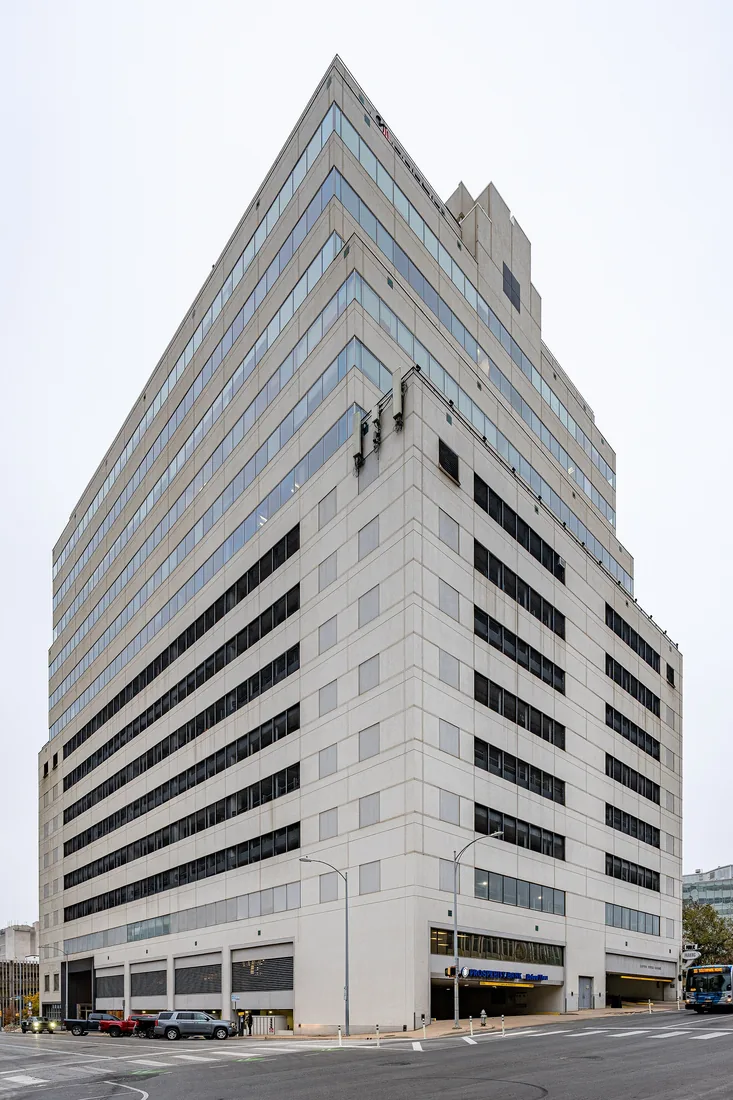
CrowdStrike was founded in 2011 by George Kurtz, Dmitri Alperovitch and Gregg Marston and is based in Austin, Texas. Its Falcon platform, first launched in 2013 as an antivirus package, protects computers and other endpoints. The company also sells threat intelligence and cyberattack response services.
Its investigators have examined high-profile attacks, including the 2014 hack of Sony Pictures. In July 2024 a faulty Falcon update crashed around 8.5 million Windows computers, disrupting airlines, banks and broadcasters around the world.
SAP
Listing symbol: SAP ·
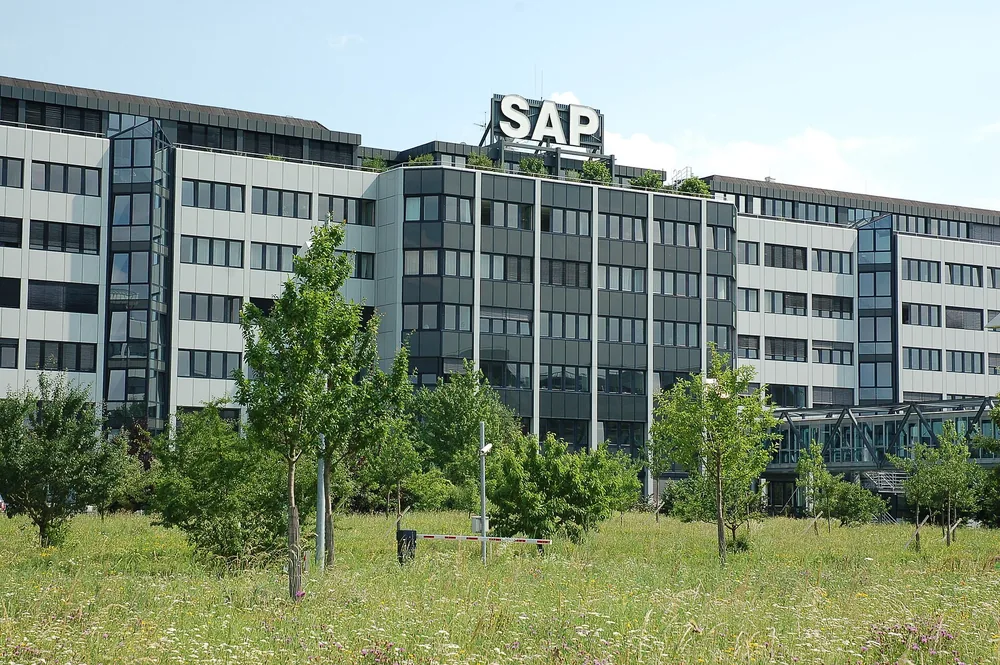
SAP was founded in 1972 by five former IBM engineers, including Dietmar Hopp and Hasso Plattner, and is based in Walldorf, Germany. It is the world’s largest vendor of enterprise software. Its main products are enterprise resource planning (ERP) systems for managing materials, production planning, human resources and more.
Its ERP generations run from R/2 in 1979 and R/3 in 1992 to S/4HANA, introduced in 2015. Between 2012 and 2014 SAP bought several major cloud software companies. It now has offices in 78 countries.
Shopify
Listing symbol: SHOP ·
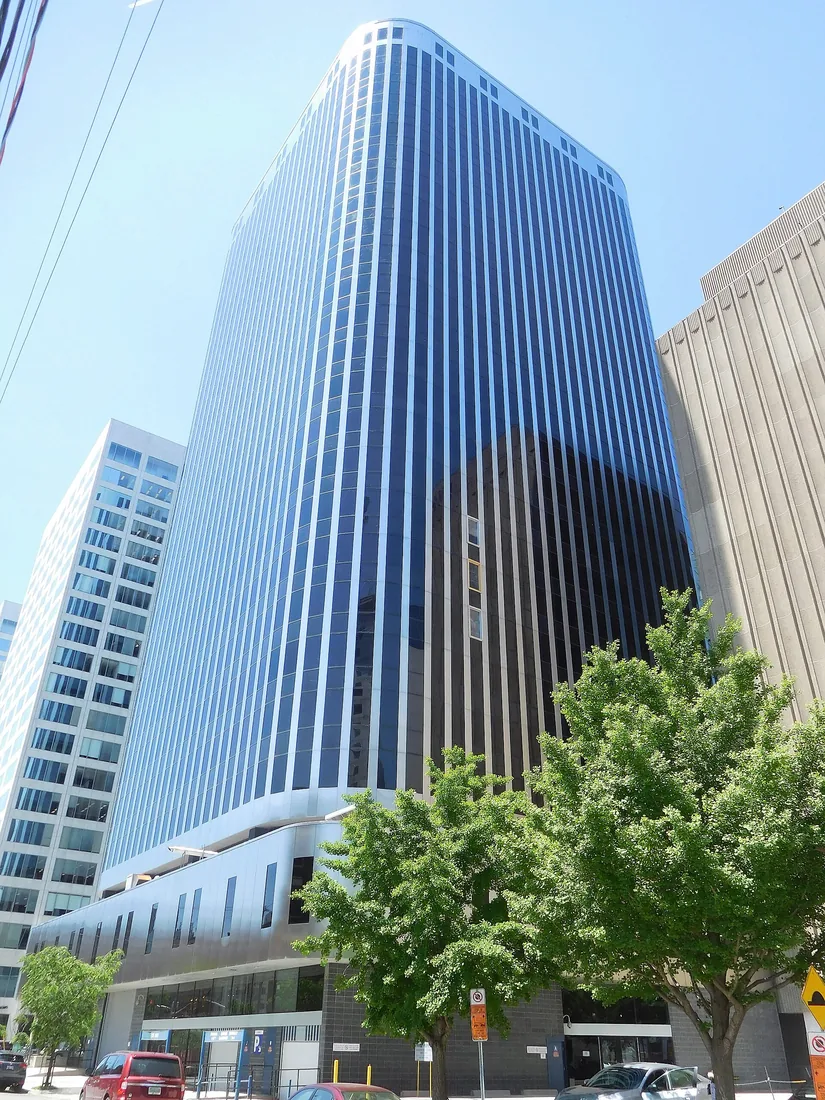
Shopify began with a snowboard shop. Tobias Lütke, Daniel Weinand and Scott Lake launched Snowdevil online in 2004. Dissatisfied with existing e-commerce products, Lütke built his own, and the founders relaunched that software as Shopify in 2006.
Based in Ottawa, the company provides the systems merchants use to run online stores and in-person sales, along with services such as Shopify Payments. It has more than five million customers, and US$292.3 billion of transactions passed through its platform in 2024.
IBM
Listing symbol: IBM ·
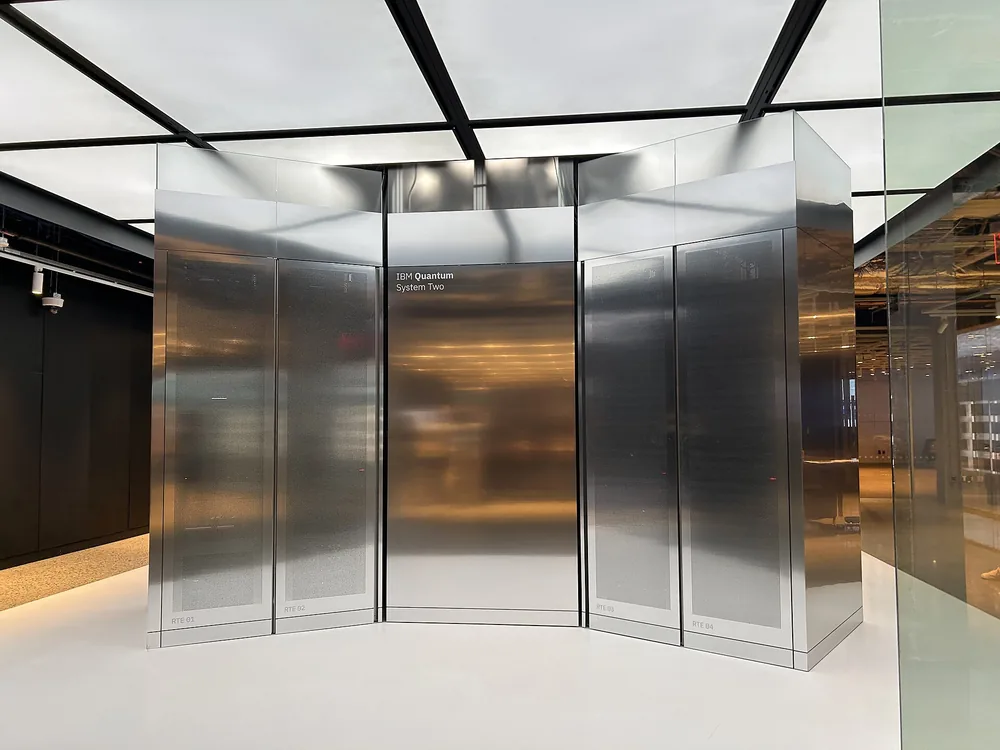
IBM began in 1911 as the Computing-Tabulating-Recording Company and took its present name in 1924, becoming the leading maker of punch-card tabulating systems. Its System/360 mainframes dominated computing in the 1960s and 1970s. Its 1981 Personal Computer set the architecture behind most PCs sold today.
Since the 1990s it has concentrated on software, services and research, selling its PC business to Lenovo in 2005. It still develops mainframes and runs the world’s largest industrial research organisation, working on chips, artificial intelligence and quantum computing.
The ranking continues: 11–100
CompaniesMarketCap · ranking and methodology
- Market capitalisation: US$194,557,198,336.00
- Market capitalisation: US$165,946,338,310.00
- Market capitalisation: US$145,174,904,832.00
- Market capitalisation: US$135,311,474,688.00
- Market capitalisation: US$118,551,379,968.00
- Market capitalisation: US$115,587,031,040.00
- Market capitalisation: US$110,673,051,648.00
- Market capitalisation: US$97,323,696,128.00
- Market capitalisation: US$93,415,784,448.00
- Market capitalisation: US$91,750,834,176.00
- Market capitalisation: US$90,569,695,232.00
- Market capitalisation: US$88,240,652,288.00
- Market capitalisation: US$82,656,092,160.00
- Market capitalisation: US$61,507,727,360.00
- Market capitalisation: US$60,438,597,632.00
- Market capitalisation: US$51,895,988,224.00
- Market capitalisation: US$48,192,266,240.00
- Market capitalisation: US$48,091,783,168.00
- Market capitalisation: US$46,859,448,320.00
- Market capitalisation: US$46,438,147,790.00
- Market capitalisation: US$45,324,873,728.00
- Market capitalisation: US$43,758,227,456.00
- Market capitalisation: US$41,763,246,080.00
- Market capitalisation: US$37,409,931,264.00
- Market capitalisation: US$36,172,054,528.00
- Market capitalisation: US$35,536,451,474.00
- Market capitalisation: US$32,928,970,164.00
- Market capitalisation: US$28,885,088,256.00
- Market capitalisation: US$27,643,588,608.00
- Market capitalisation: US$25,826,525,184.00
- Market capitalisation: US$24,614,261,108.00
- Market capitalisation: US$23,962,963,968.00
- Market capitalisation: US$23,546,787,840.00
- Market capitalisation: US$21,020,336,128.00
- Market capitalisation: US$19,346,451,288.00
- Market capitalisation: US$19,199,471,616.00
- Market capitalisation: US$18,965,616,640.00
- Market capitalisation: US$18,496,135,168.00
- Market capitalisation: US$18,364,911,616.00
- Market capitalisation: US$18,193,349,676.00
- Market capitalisation: US$18,039,957,504.00
- Market capitalisation: US$17,155,040,256.00
- Market capitalisation: US$15,517,468,672.00
- Market capitalisation: US$15,066,583,040.00
- Market capitalisation: US$14,303,399,936.00
- Market capitalisation: US$14,219,433,984.00
- Market capitalisation: US$13,987,778,560.00
- Market capitalisation: US$13,793,904,982.00
- Market capitalisation: US$13,787,924,480.00
- Market capitalisation: US$13,676,379,136.00
- Market capitalisation: US$13,559,948,288.00
- Market capitalisation: US$13,157,256,192.00
- Market capitalisation: US$13,043,731,769.00
- Market capitalisation: US$12,828,325,888.00
- Market capitalisation: US$12,822,429,696.00
- Market capitalisation: US$12,727,045,668.00
- Market capitalisation: US$12,660,489,216.00
- Market capitalisation: US$11,923,733,038.00
- Market capitalisation: US$11,510,177,792.00
- Market capitalisation: US$11,382,425,600.00
- Market capitalisation: US$11,337,828,352.00
- Market capitalisation: US$11,306,209,179.00
- Market capitalisation: US$11,180,042,240.00
- Market capitalisation: US$11,133,729,792.00
- Market capitalisation: US$10,898,702,336.00
- Market capitalisation: US$10,716,904,448.00
- Market capitalisation: US$10,691,342,336.00
- Market capitalisation: US$10,570,230,784.00
- Market capitalisation: US$10,296,759,296.00
- Market capitalisation: US$10,131,004,416.00
- Market capitalisation: US$9,651,848,192.00
- Market capitalisation: US$9,204,989,565.00
- Market capitalisation: US$9,136,319,327.00
- Market capitalisation: US$9,086,546,327.00
- Market capitalisation: US$8,978,121,392.00
- Market capitalisation: US$8,824,764,416.00
- Market capitalisation: US$8,503,420,928.00
- Market capitalisation: US$8,377,429,504.00
- Market capitalisation: US$8,127,820,800.00
- Market capitalisation: US$8,035,975,490.00
- Market capitalisation: US$8,034,223,904.00
- Market capitalisation: US$7,980,766,208.00
- Market capitalisation: US$7,857,658,013.00
- Market capitalisation: US$7,849,371,260.00
- Market capitalisation: US$7,715,951,616.00
- Market capitalisation: US$7,304,990,720.00
- Market capitalisation: US$7,300,498,196.00
- Market capitalisation: US$7,114,526,791.00
- Market capitalisation: US$6,976,558,592.00
- Market capitalisation: US$6,801,182,720.00
There is always a story.
The software list shows how widely code now runs through the economy, and how broadly a single data provider draws the boundary around it. Read the classification as the source’s, and the values as a snapshot from 14 October 2026.